From Dropout to World Champion: The Unlikely Triumph of Zhang Xue
When Passion Outruns Pedigree: The Zhang Xue 820RR Miracle
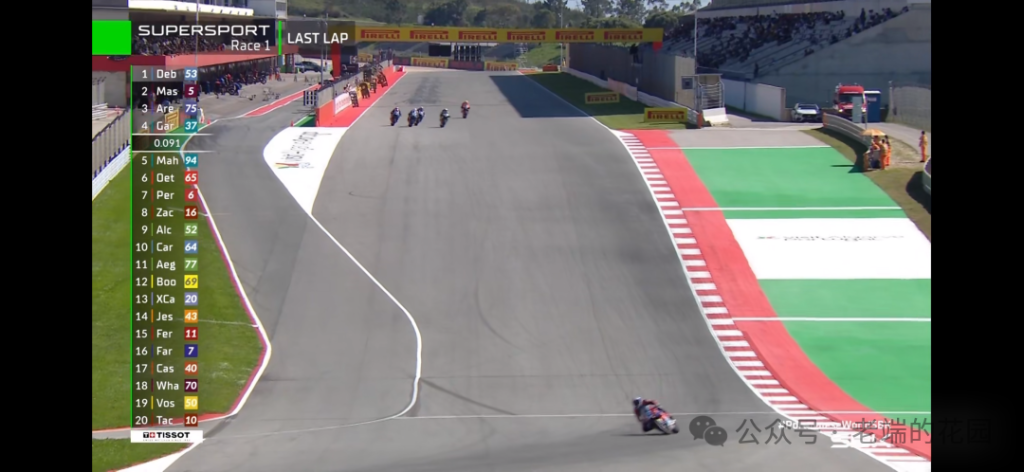
Zhang Xue has recently become a global sensation. His motorcycle, the 820RR, achieved a historic result in a World Championship race, crossing the finish line with a nearly four-second lead over a field of foreign competitors. The photo capturing this iconic moment shows his 820RR in the bottom right corner, with a trailing pack of renowned international brands like Yamaha, Ducati, and Kawasaki far behind. It’s said that even the foreign commentators were left speechless by the sheer improbability of it all. How could this be? Zhang Xue is the founder of a domestic brand that had only been established for two years. How did he pull this off?
Driven by this question, I began digging through archives and stumbled upon a documentary from 2006. After watching it, I felt that if someone like him didn’t succeed, the world would truly be unjust. Simply put, a middle school dropout who ultimately propelled Chinese motorcycles onto the world stage and defeated foreign manufacturers – this very fact alone should make many people reconsider: is a formal degree truly the only path to success?
Zhang Xue’s starting point was incredibly challenging. He was born in Mayang, Huaihua, Hunan Province. His parents divorced when he was very young; his father disappeared, and his mother remarried. Facing severe financial hardship, he had to drop out before finishing middle school, leaving the formal education system early. By many of today’s standards, such a start in life would almost predestine one to be counted out. No degree, no resources, no connections – even the most basic pathways to advancement seemed completely severed.
But interestingly, a person’s potential for achievement often isn’t determined by whether they follow the standard track, but by whether they have something that truly ignites their passion. For Zhang Xue, that spark was motorcycles. While others saw them as transport, toys, or recreation, he was genuinely obsessed, passionate to the core. His greatest dream back then wasn’t to find a stable job or save up for a house, but to become a professional racer and prove himself on the track.
But racing requires money. With no funds, what could he do? Before turning 17, he started learning motorcycle repair. After saving up around fifty to sixty thousand yuan, he spent 1,000 yuan on a heavily used smuggled bike and began training on his own. Feeling he had reached a certain level but lacking a sponsor to discover him, he approached a television station, asking them to film a promotional piece for him. The station naturally ignored him, so he persistently badgered a reporter. The footage I saw from the 2006 documentary captured this very persistence.
After the station aired the segment, someone from a racing circuit actually called him and invited him over. He went and trained for two years, exhausting all his savings. But reality was harsh; effort doesn’t automatically equate to success. Ultimately, he was advised to leave because, factually, he lacked the innate talent for racing. The path to becoming a racer had, in practical terms, failed.
Many people, reaching this point, might accept their fate, give up, bury their passion deep inside, and resign themselves to an ordinary life. But Zhang Xue did not. He realized that if the path of a rider was blocked, he could pivot – he could build the motorcycles. He understood bikes intimately: the mechanics, the performance, the modifications, what riders truly wanted. He could even reassemble a motorcycle with his eyes closed.
So he immersed himself in online forums, and as mentioned in my previous article, began passionately writing articles about motorcycles. He became a thought leader in the motorcycle community at the time. This wasn’t just theoretical knowledge; Zhang Xue genuinely had the skills. He would source parts for others and personally assemble them into complete motorcycles to sell. By sharing his expertise and building a community of enthusiasts around him, he started earning money through bike assembly, securing his first pot of capital.
I share Zhang Xue’s story not to advocate that “education is useless,” but to illustrate that while a degree is one important path, it is not the only one. What truly determines a person’s ability to succeed isn’t just what school gave you, but also whether you have the capability to retrain yourself in another arena.
If Zhang Xue’s story were merely about an underdog’s rise, it wouldn’t be exceptionally rare. What elevates it to a legend is his subsequent transformation from a “motorcycle enthusiast” to a “motorcycle manufacturer,” from someone who wanted to win championships himself to someone who enabled others to win championships on his machines.
After earning money from assembling bikes, Zhang Xue found partners and founded a new company,KOVE MOTO. The company was profitable, but Zhang Xue’s ambition wasn’t just to make a comfortable living. He wanted to build the best engines. This led to disagreements with his partners, and eventually, he chose to go independent and launch his own brand.
On the surface, it was a split between business partners. At its core, it was a clash between two fundamentally different life philosophies – how they viewed risk, the future, and the company’s destiny. His partners had endured years of hardship with him, with most profits reinvested into R&D, yielding little personal gain. Now that the company had a foundation and life seemed poised to become comfortable, choosing conservative management – relying on existing products, focusing on profit, dividends, and a better life – was perfectly logical, the “normal” way of thinking.
But Zhang Xue thought differently. His reasoning was: if we don’t push forward now, taking the gamble, the company might survive, but it would likely remain ordinary forever, never achieving genuine technological leadership or distinctive brand recognition. So, he placed his bet on a much harder, more expensive, and uncertain path: developing a triple-cylinder engine.
When others were unwilling to follow, it was understandable. Faced with this situation, a normal person would naturally ask: why bother? After all these years of struggle, why not enjoy the fruits of success? Why continue taking such risks?
This is precisely what makes Zhang Xue seem like a “fanatic.” Many people are willing to work hard and endure hardship, but what’s truly rare is the willingness, at the moment when you can finally relax, to stake everything once more.
Developing a triple-cylinder engine wasn’t a path everyone was eager to take. Technologically more complex, harder to develop, and commercially riskier. A twin-cylinder might be more stable and marketable; a four-cylinder might tell a better high-performance story. The triple sits awkwardly in the middle – a difficult path lacking obvious appeal. Others avoided it because they calculated the risks as too high, not worth it. But Zhang Xue believed in it. He believed the triple-cylinder could succeed. You could call it stubbornness or an entrepreneur’s instinct. Risk-averse individuals fear risk the most; pioneers fear mediocrity. Most people start businesses hoping for an early, comfortable life. Someone like Zhang Xue starts a business to materialize that unyielding spirit within him.
Had he lost this bet, the story might have ended there. The world rarely shows much mercy to failures. But now, it’s proven he was right. The triple-cylinder path wasn’t a pipe dream; it was genuinely achieved.
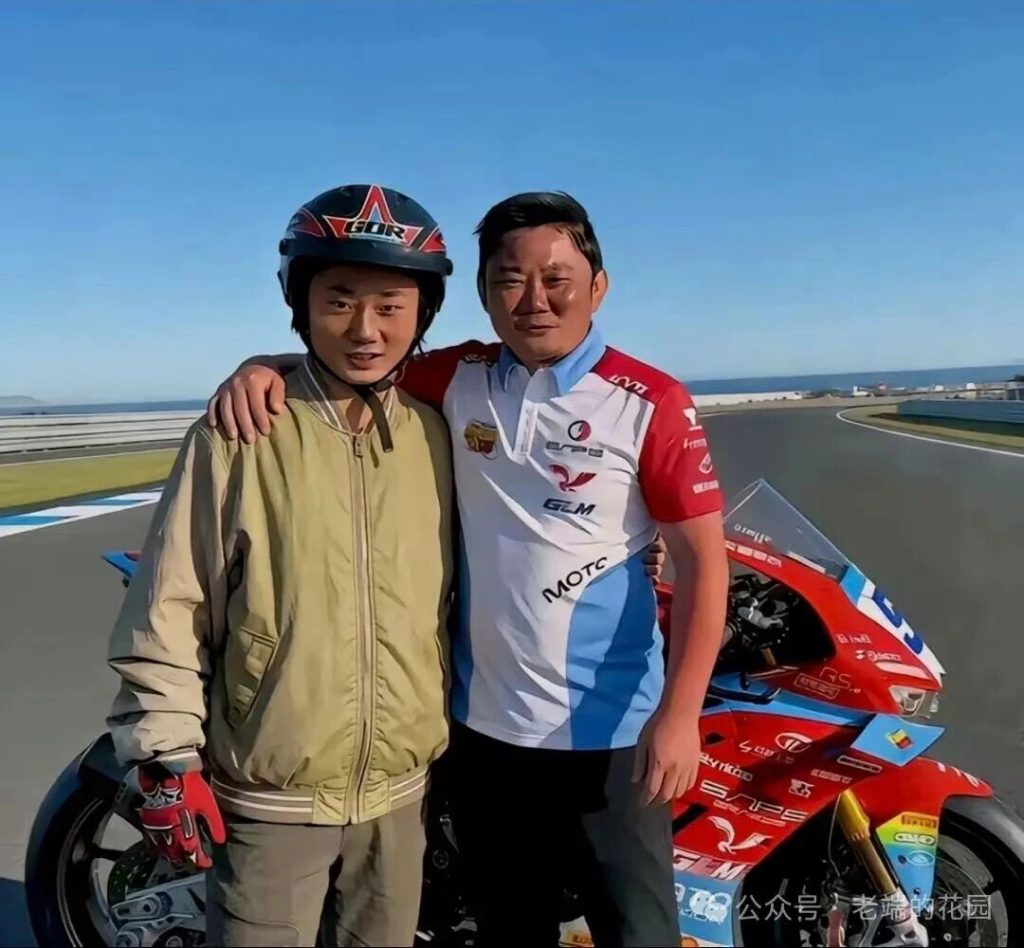
Someone used AI to create a striking image: on the left, Zhang Xue from 2006, chasing after a TV reporter for exposure, dreaming of becoming a racer; on the right, Zhang Xue today, owner of a company valued at one billion yuan. Behind them stands his 820RR, the very motorcycle someone just rode to defeat foreign competitors and secure a world championship, proving that the Chinese can build world-class engines.
What makes Zhang Xue’s story so compelling is that almost every step he took deviated from the safest, most conventional path. A low starting point, derailed education. Failed as a racer after two years of intense effort. Finally earned initial capital assembling bikes, could have chosen stability, but refused to stop. When partners preferred safe management to share profits, he insisted on reinvesting in R&D. At the critical juncture, he bet everything on the difficult triple-cylinder path. This isn’t ordinary “hard work”; it’s a driven, relentless, unyielding spirit bordering on obsession.
This is precisely why Zhang Xue’s story resonates so powerfully with those trapped in anxiety over academic credentials. Many worry less about the degree itself than the underlying fear: without this diploma, how else can I prove my worth? If I don’t follow society’s pre-designed path, do I still have a chance to succeed?
Zhang Xue’s answer is straightforward: of course you do, but only if you have truly fought for your dreams.
A degree is essentially a screening mechanism. It helps many people integrate efficiently into the social division of labor; it certainly holds value and importance. But it has never been the world’s only form of validation. In the real world, there exist other types of people. They may not excel at exams or get high scores in school, but once they encounter a field they are truly passionate about, they unleash remarkable research capabilities, hands-on skills, and sustained dedication. If such individuals persistently delve deep into their chosen area, they will inevitably carve out their own niche.
Of course, this doesn’t mean everyone can replicate Zhang Xue’s success. Ultimately, Zhang Xue isn’t an “ordinary” person. He possesses a strong streak of extremity, even eccentricity. He isn’t someone who drifts with the current or settles for the comfortable. He represents a type increasingly rare in modern society: someone who, even when they could live comfortably, chooses to pursue riskier endeavors. The probability of failure for such individuals is high, but when they succeed, they leave others far behind.
So, if one essential takeaway must be distilled from Zhang Xue’s story, it isn’t that “education is useless” or “dropping out leads to success.” What’s truly worth remembering is this: there are many paths to success, not limited to academic credentials. But regardless of the path you choose, you must possess something that can cut through reality. This something could be passion, resilience, profound professional expertise, or the judgment to keep betting on the future when everyone else wants to stop.